
Swimming is one of the most popular and low-impact sports available, but in excess, it can put you at risk for shoulder injury. If you’ve been dealing with shoulder pain from swimming, you’re not alone. In fact, swimmer’s shoulder is one of the most common overuse injuries I see in my practice. Whether you’re a competitive swimmer logging thousands of yards a week or a recreational swimmer who enjoys a few laps at the local pool, your shoulder is working hard every time you get in the water. Understanding what causes this pain, and, more importantly, how to prevent it, can make a real difference in keeping you in the pool.
Key Takeaways
- Shoulder pain from swimming is commonly caused by repetitive overhead motion, which can stress the rotator cuff tendons, bursa, and other surrounding structures over time.
- Poor stroke mechanics, muscle imbalances, and inadequate recovery are among the most common contributing factors seen in swimmers.
- Targeted rotator cuff and shoulder blade strengthening, along with technique correction, may reduce the risk of developing swimmer’s shoulder.
- If pain persists or worsens despite rest and activity modification, it may be time to have your shoulder evaluated.
Why Swimmers Are So Prone to Shoulder Problems
The shoulder is the most mobile joint in the human body. That’s exactly what makes it so useful, and, at the same time, so vulnerable. During a freestyle stroke alone, a swimmer’s arm moves through a large arc of motion that approaches the shoulder’s full range, and that motion gets repeated hundreds or even thousands of times in a single practice. Multiply that across a full season or years of swimming, and the cumulative stress on the shoulder adds up faster than most people realize.
The repetitive nature of swimming is really what sets it apart from many other sports. Your shoulder muscles, tendons, and ligaments are asked to perform the same movement patterns again and again, often at high volume and without enough recovery time between sessions. This can lead to microtrauma, which can gradually develop into inflammation, pain, and dysfunction if the underlying issues aren’t addressed.
It’s also worth understanding the role of the rotator cuff in all of this. The rotator cuff is a group of four muscles and their tendons that wrap around the shoulder joint and help keep the ball of the upper arm seated properly in its socket during movement. When these muscles become fatigued, weak, or imbalanced, the shoulder joint may shift subtly out of its ideal position with each stroke, increasing stress on the tendons and surrounding structures.
Conditions Commonly Caused by Swimming
Swimmer’s shoulder rarely develops from a single event. Most of the time, it builds gradually because of a combination of factors working against the joint over time. Here are some of the most common causes:
Impingement
Shoulder impingement is a frequently diagnosed cause of shoulder pain in swimmers. It occurs when the rotator cuff tendons become pinched or compressed as the arm moves overhead. Over time, that repeated compression can cause inflammation in the tendon itself or in the bursa, a small fluid-filled sac that cushions the joint. That inflammation leads to pain, swelling, and a reduction in how freely the shoulder moves.
Rotator Cuff Tendinitis or Tears
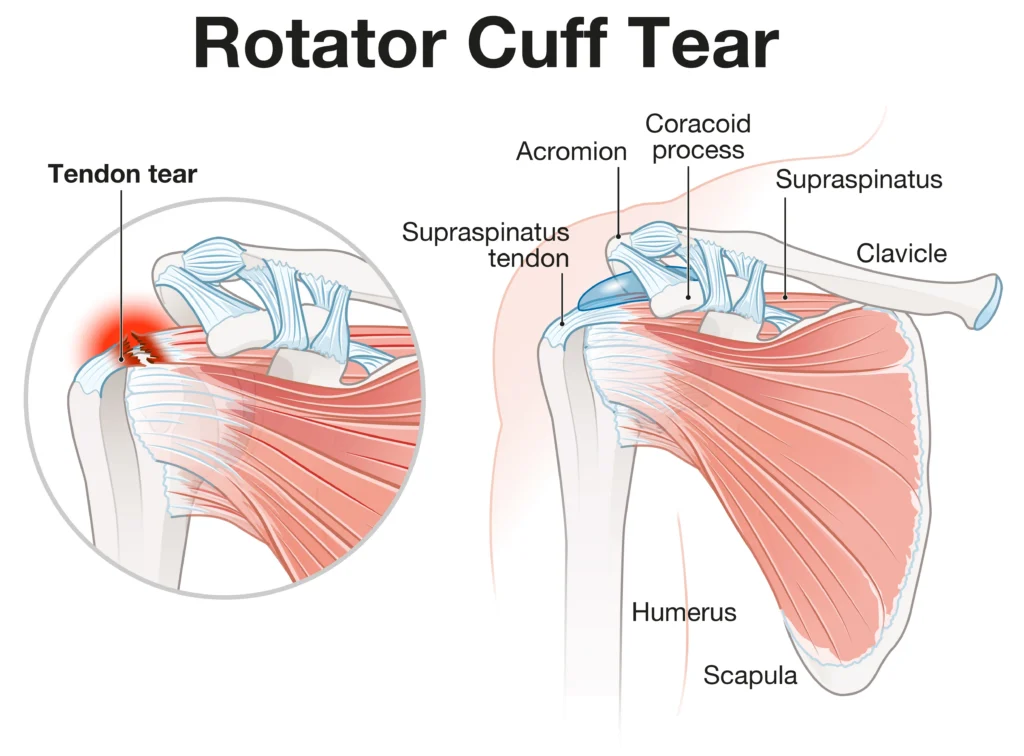
Beyond impingement, the rotator cuff tendons can become inflamed from overuse, a condition known as tendinitis. In more significant cases, partial or full tears may develop, particularly in swimmers who train at high volume or who have accumulated years of wear without addressing muscle imbalances or technique issues. Rotator cuff tendinitis often causes a deep, dull aching sensation in the shoulder, particularly during or after swimming. If a tear is present, you may also notice more pronounced weakness alongside the pain, especially when lifting the arm overhead.
Shoulder Instability
Some swimmers, particularly those who are naturally hypermobile or who train at very high volumes over many years, may develop shoulder instability. This happens when the ligaments and labrum that normally keep the ball of the shoulder seated firmly in its socket become lax or stretched over time. A mildly unstable shoulder might feel like a vague looseness, clicking, or occasional catching sensation. More severe instability can sometimes lead to partial or complete dislocations, and swimmers with underlying instability may also be at higher risk for developing other shoulder injuries because the joint isn’t tracking as precisely as it should.
Biceps Tendinitis
The biceps tendon attaches near the top of the shoulder joint and can be strained by repetitive swimming motions as well. Biceps tendinitis tends to produce pain along the front of the shoulder that can occasionally radiate down toward the elbow.
Common Causes of Pain from Swimming
Poor Stroke Mechanics
Even a swimmer who is otherwise healthy and well-conditioned can develop shoulder pain if their stroke mechanics place the joint in awkward or high-stress positions. Common technique issues that can contribute to shoulder pain include crossing the arm past the body’s centerline during the catch phase, improper hand entry angle, and over-reaching at the front of the stroke. Breathing patterns also matter. Swimmers who consistently breathe to only one side may develop uneven muscle strength and place disproportionate strain on one shoulder over time.
Muscle Imbalances
Swimming places heavy demands on the muscles at the front of the shoulder and chest. At the same time, the muscles at the back of the shoulder and around the shoulder blade often don’t receive nearly as much training stimulus. Over time, this imbalance can gradually pull the shoulder forward and out of its neutral resting position, which narrows the space available for the tendons to glide freely and increases the risk of impingement.
Training Errors
Rapidly increasing training volume or intensity without giving the body adequate time to adapt is a common setup for overuse injuries of all kinds. If you’ve recently increased your yardage significantly, added high-intensity training sets, or returned to the pool after a break without building back gradually, your shoulder may not have had enough time to adjust to the new demands being placed on it.
Recognizing the Symptoms
Shoulder pain from swimming can present differently depending on which structures are involved and how far the injury has progressed. Some of the most common symptoms swimmers describe include:
- A dull ache or sharper pain in the front, top, or outer part of the shoulder
- Pain that develops during or shortly after swimming
- Discomfort when reaching overhead or across the body
- Noticeable weakness when trying to lift or rotate the arm
- Pain at night, particularly when lying on the affected side
- A sense of clicking, catching, or grinding within the joint
One detail worth paying attention to is when the pain tends to occur. Pain that begins immediately at the start of practice may point to a different underlying issue than pain that only develops after a significant yardage threshold is crossed. Both are worth noting, and both can provide helpful information.
How to Help Prevent Swimmer’s Shoulder
Several preventive strategies exist that may help reduce your risk of shoulder pain from swimming.
Focus on Stroke Mechanics
Working with a qualified swim coach to analyze and refine your technique is a valuable step you can take for long-term shoulder health. Even relatively small adjustments in hand entry position, pull mechanics, or body rotation can reduce the cumulative stress on the shoulder over a full season.
Strengthen the Rotator Cuff and Shoulder Blade Muscles
Targeted strengthening exercises, particularly those that address the external rotators of the rotator cuff and the muscles responsible for stabilizing the shoulder blade, can play an important role in maintaining healthy mechanics. These are often the muscles that get neglected when swimmers focus primarily on pool training.
Manage Your Training Load Thoughtfully
Gradual, progressive increases in training volume tend to be far better tolerated by the shoulder than sudden spikes in yardage or intensity. If you’re returning from time off or moving to a higher training level, give your body time to adapt rather than jumping straight to full workload. Recovery periods are not a sign of weakness. They are a genuinely essential component of any well-designed training program. Consistently training through fatigue and soreness without adequate rest is one of the more predictable paths toward overuse injury.
Build in a Warm-Up and Cool-Down
Taking five to ten minutes to warm up the shoulder before getting in the water can help prepare the joint for the demands ahead. Dynamic movements that gradually take the shoulder through its range of motion, along with light rotator cuff activation exercises, may reduce early-session irritation. After practice, gentle stretching of the chest and anterior shoulder can help address tightness in structures that tend to become shortened in swimmers, supporting better posture and shoulder mechanics over time.
Balance Your Dry-Land Training
If your off-water training involves a lot of pulling or pressing movements that emphasize the chest and front of the shoulder, make sure you’re also including exercises that strengthen the back of the shoulder and the muscles along the spine of the shoulder blade. Creating balance between the front and back of the shoulder is often an underappreciated element of a comprehensive injury prevention plan.
When to See a Shoulder Specialist
Mild muscle soreness after an unusually demanding practice may resolve on its own with a few days of rest. But there are situations where it makes sense to have your shoulder properly evaluated rather than waiting it out. Consider seeking care from an experienced shoulder specialist if:
- Pain persists despite rest and activity modification
- The pain is progressively worsening rather than gradually improving
- You notice weakness that affects your ability to swim or complete daily activities
- You experience a sense of instability, catching, or the shoulder feeling like it might “give out”
- Pain is regularly disrupting your sleep
Early evaluation may help guide appropriate treatment and potentially improve recovery outcomes. In many cases, a combination of physical therapy, activity modification, and other targeted treatment may help improve symptoms. When conservative care isn’t providing adequate relief, surgical options, such as rotator cuff repair or stabilization procedures, may be considered, depending on what’s found.
Summary
Shoulder pain from swimming is a challenge that affects swimmers at every level of the sport. The repetitive nature of swimming, combined with the high training volumes many swimmers maintain, can place significant and cumulative stress on the rotator cuff, bursa, and surrounding structures. While the underlying causes can vary, many cases may be preventable with the right habits. Paying attention to technique, building shoulder strength, managing training load wisely, and listening to your body when it signals discomfort can go a long way toward protecting your shoulders for years of swimming ahead. If pain does develop and doesn’t settle down on its own, don’t put it off. Earlier evaluation typically means more options and a smoother road to recovery.
Frequently Asked Questions
Can I keep swimming if my shoulder hurts?
It depends on the severity and nature of the pain. Mild soreness may not require you to stop completely, but modifying your training while the shoulder settles down is often a reasonable approach. If the pain is significant, worsening, or accompanied by weakness, it’s generally best to rest and have the shoulder evaluated before returning to full training.
Is surgery typically needed for shoulder pain from swimming?
Many cases of shoulder pain from swimming can be managed without surgery. Conservative care, including physical therapy, rest, anti-inflammatory treatment, and technique correction, is typically the first approach. Surgery may be considered when conservative treatment hasn’t provided adequate relief over a reasonable period of time, or when a structural injury such as a significant rotator cuff tear or labral tear is identified that may not heal on its own.
What can I do right now to protect my shoulders?
A few of the most impactful things you can do are to have your stroke mechanics reviewed by a qualified coach, incorporate rotator cuff and shoulder blade strengthening exercises into your routine outside of the pool, and be intentional about managing your training volume, especially when ramping up intensity or returning after a break.