
Medically reviewed by Nathan Orvets, MD
Most of the chest injuries I treat in lifters start the same way. There’s a heavy set of bench press, a sudden pop near the armpit, and an athlete who knows right away that something went wrong. A pectoralis major tear isn’t a common injury, but it’s one where timing matters a great deal. When the tendon pulls completely off the bone, the best window for repair tends to be the first few weeks. In this post, I’ll explain how a pectoralis major tear happens, how I sort out which tears need surgery, and why I encourage lifters not to “wait and see.”
Key Takeaways
- Most pec tears happen during bench press or other heavy pressing, usually near the bottom of the lift.
- A pop, bruising across the chest or upper arm, and a change in the shape of the armpit are classic warning signs.
- When the tendon tears off the bone, earlier repair, ideally within the first few weeks, tends to be easier and may lead to better strength recovery.
What the Pectoralis Major Does
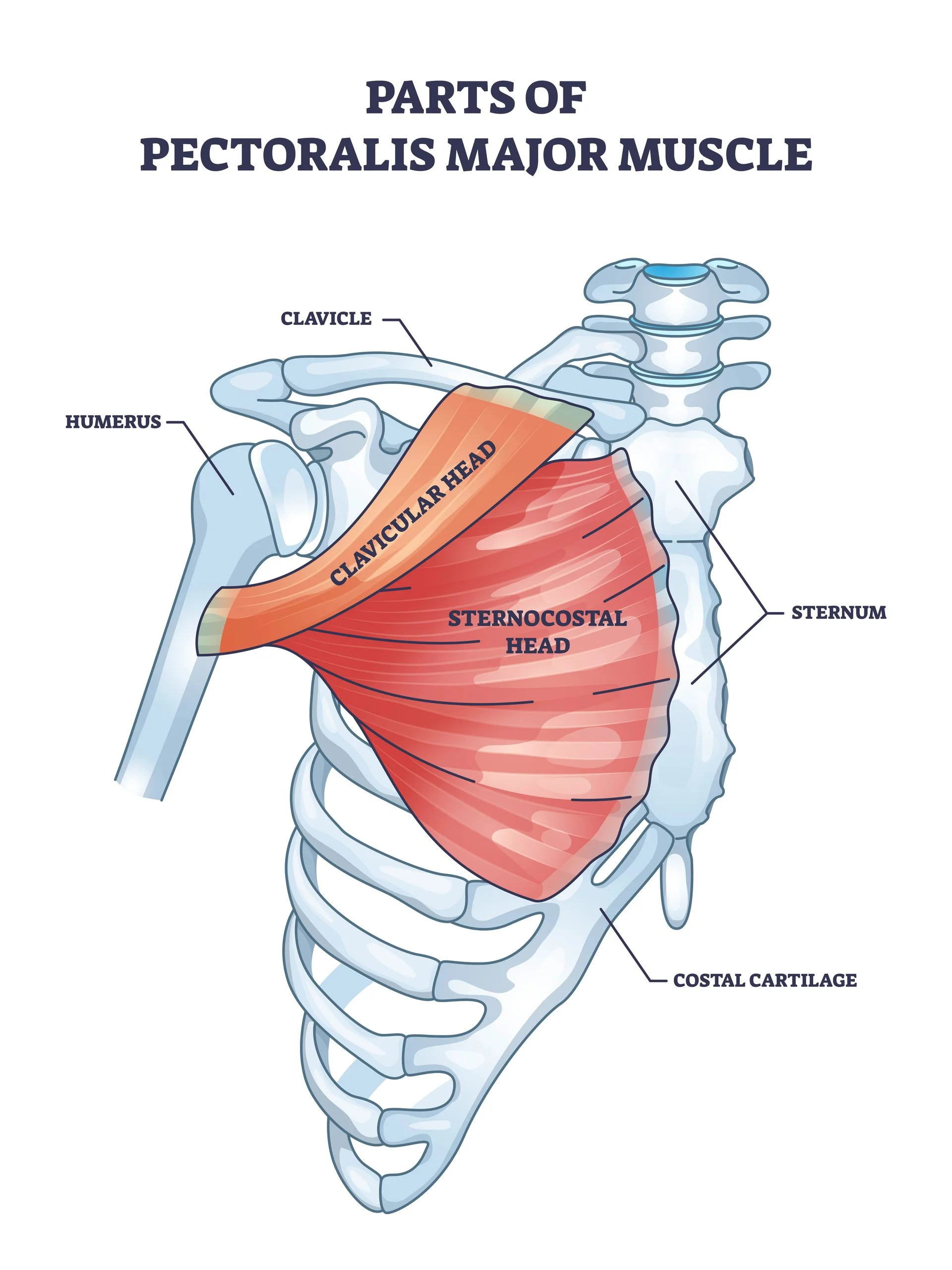
The pectoralis major is the large, fan-shaped muscle across the front of your chest. It has two main parts. The upper portion starts at the collarbone, and the larger lower portion starts at the breastbone. Both parts narrow into a flat tendon that attaches to the upper arm bone, just below the shoulder.
This muscle pulls your arm across your body and rotates it inward. It also powers nearly every pushing and pressing motion, from shoving a heavy door open to locking out a bench press.
How a Pectoralis Major Tear Happens
The classic mechanism is an eccentric load. That’s when a muscle is lengthening while it’s working hard. On the bench press, the lowering phase does exactly that. As the bar comes down, the arm moves out and back, stretching the pec while it strains to control the weight. If the load exceeds what the tendon can handle, it can tear, most often right where it attaches to the bone.
Bench press accounts for a large share of these injuries, but I also see them from weighted dips, football tackles, and wrestling. The vast majority of patients are men in their 20s through 40s. Research has also linked anabolic steroid use to a higher risk of pec tears, likely because muscle strength can build faster than tendon strength.
Signs of a Torn Pec
The first sign is usually a pop or tearing sensation, sometimes with immediate pain and weakness. Lifters often rack the bar right away or need a spotter to take it.
The second sign is bruising. Within a few days, a large bruise often spreads across the chest and down the inside of the upper arm. That bruising can look dramatic, but it doesn’t tell us much about how bad the tear is.
The third sign is a change in the shape of the chest. The front fold of the armpit may look thinner or sunken. When you press your palms together, the muscle may bunch up toward the middle of the chest. When I see that change, I suspect the tendon has pulled off the bone.
Why a Pec Tear Needs Fast Treatment
Once a tendon tears away from the bone, the muscle starts pulling it back toward the chest. Over the following weeks, the tendon shortens and scar tissue forms around it. Both changes make a later repair harder.
Many studies have found that repairs done in the first few weeks tend to be more straightforward. Early repair may also lead to better strength and patient satisfaction. Delayed repair is still possible for many patients, sometimes months later. A chronic tear, though, may require a tendon graft to bridge the gap, and results can be less predictable.
So here is my stance. If you felt a pop on the bench and your chest looks different, I’d much rather see you this week than next month. An exam and an MRI can usually tell us quickly whether the tendon is torn from the bone or whether the damage is within the muscle itself.
When Nonsurgical Treatment Makes Sense
Not every pectoralis major tear needs surgery. Partial tears and tears within the muscle itself often heal well with nonsurgical care. That typically includes a short period of rest, ice, and a sling for comfort, followed by physical therapy that gradually rebuilds motion and strength.
Nonsurgical care may also be the better choice for patients with lower physical demands or medical conditions that raise surgical risk. For a complete tendon tear, the trade-off is usually some permanent loss of pressing strength and a visible difference in the chest. Many people still function well in daily life, but competitive lifters may find that loss hard to accept.
What I See in My Patients
The pectoralis major tear reminds me a lot of the distal biceps ruptures I treat at the elbow. It involves the same sudden pop, the same lifting crowd, and the same ticking clock. In both injuries, the patients who come in early usually have the most options.
The most common pattern I notice is a lifter who assumed it was a bad muscle strain. The bruising shows up, the pain settles down within a week or two, and they try to train around it. By the time pressing still feels weak weeks later, the tendon has already retracted and scarred in.
I also hear a similar story about the injury itself. It’s often the last heavy rep of a set, a new max attempt, or a lift done while already fatigued. In the Portland area, I see this in serious powerlifters, functional fitness athletes, and weekend lifters alike.
My Approach to Pectoralis Major Tear Treatment
When a patient comes in with a suspected pec tear, I try to move quickly. I examine the chest and shoulder, and I order an MRI to confirm where the tear is and how much of the tendon is involved.
For a complete tendon tear in an active patient, I generally recommend surgical repair. The procedure is typically done as an outpatient surgery through an incision near the front of the armpit. I bring the tendon back to its original attachment on the upper arm bone. Sutures and small anchors hold it there while it heals. When a tear is older and the tendon can’t reach its attachment, a bridging graft may be needed.
As with most of my outpatient procedures, patients usually go home the same day. My pain plan relies on a nerve block and non-opioid medications whenever that approach fits the patient. I also talk honestly with every lifter about the recovery timeline before surgery, because the waiting is the part most people underestimate.
Recovery After Pectoralis Major Repair
The timeline below applies after a surgical repair of the pec tendon. Nonsurgical recovery follows a different and usually faster path, guided by symptoms and therapy progress.
- First four to six weeks: A sling protects the repair. Gentle, therapist-guided motion starts, but the arm avoids moving out to the side and back, since that position stretches the repair.
- Around six to twelve weeks: Active motion returns, and light daily tasks become easier.
- Around three months: Gradual strengthening begins with light resistance. Pressing movements stay off the table.
- Around five to six months: Many patients start a slow return to pressing. Heavy bench press usually waits until around six months, and sometimes longer.
When lifters get back under the bar, I suggest starting well below their old numbers and building back over several months. A healed tendon still benefits from a patient ramp-up.
Preventing a Pec Tear
No routine guarantees protection, but a few habits may lower your risk:
- Warm up with lighter sets before working up to heavy weight.
- Control the lowering phase instead of dropping the bar to your chest.
- Avoid a very wide grip with elbows flared out at the bottom of the lift.
- Use a spotter or safety arms for heavy sets, and skip max attempts when you’re already fatigued.
Heavy lifting can stress the elbows as well as the chest, which I discuss in my post on elbow problems from lifting weights.
Summary
A pectoralis major tear usually happens during heavy pressing, and the signs are often clear: a pop, spreading bruising, and a change in the shape of the chest. We covered how the injury happens, which tears can heal without surgery, why complete tendon tears may benefit from early repair, and what a six-month recovery typically involves.
If you felt a pop in your chest while lifting, don’t wait for the bruise to fade before deciding what to do. Request an appointment at our Tualatin or Oregon City office as soon as you can, so we can confirm the type of tear while every treatment option is still on the table.
Frequently Asked Questions
Can a torn pec heal on its own?
Partial tears and tears within the muscle belly may heal well with rest and physical therapy. A complete tear of the tendon from the bone doesn’t reattach on its own. Some people still function well without surgery, but they usually lose some pressing strength.
How soon should I see a doctor after a pec injury?
Ideally within a few days. If the tendon has torn off the bone, repair within the first few weeks tends to be easier and may lead to better results. Delayed repair is still possible, but it can be more complex.
How long after pec surgery can I bench press again?
After a surgical pec repair, heavy bench press usually waits until around six months, and sometimes longer. Many patients begin a light, gradual return to pressing around five to six months, once they’ve rebuilt strength in therapy and I’ve cleared them.
Will I get my full strength back after pec repair?
Many patients regain most of their strength after a timely repair and return to lifting. Results vary, and full strength isn’t guaranteed, especially with older or more severe tears.
Do women tear their pectoralis major?
It can happen, but pectoralis major tears are much more common in men. Most reported cases involve men between their 20s and 40s who were lifting heavy weight at the time of injury.
