
If you’ve ever felt a sharp twinge, a deep ache, or a sudden pop in your elbow mid-pitch, you’re not alone. Elbow pain when throwing is one of the most common complaints I see in athletes, from youth baseball players to adult recreational pitchers, javelin throwers, and quarterbacks. It can start as something minor that you try to push through. But left unaddressed, it may develop into a more serious problem that affects your ability to compete, practice, or even perform everyday tasks. In this post, we’ll review common causes of elbow pain when throwing, as well as possible treatment options.
Key Takeaways
- Elbow pain when throwing may involve the ligaments, tendons, or nerves on the inner side of the elbow, and early evaluation may help prevent a minor issue from becoming a more serious one.
- Common causes include UCL injuries, valgus extension overload, flexor-pronator tendinopathy, and ulnar nerve irritation.
- Diagnosis typically involves a physical examination, a review of your throwing history, and imaging such as MRI or X-ray.
- Many cases respond well to rest, physical therapy, and activity modification, though some conditions may benefit from surgical intervention.
Why the Elbow Takes Such a Hit During Throwing
The throwing motion looks fluid from the outside, but it generates extraordinary forces through the elbow, particularly on the inner, or medial, side. During the late-cocking and acceleration phases, the elbow experiences what’s called a valgus load. This essentially tries to pry the inner side of the joint apart while simultaneously compressing the outer side. It’s a lot to ask of a relatively small joint.
For pitchers, the stresses produced during a single pitch can approach the upper limits of what the elbow’s structures are capable of handling. Multiply that by the number of pitches thrown over a season, and it becomes clear why throwing athletes are prone to elbow problems. The structures most at risk include soft tissue structures on the inner elbow (ulnar collateral ligament, the flexor-pronator muscle group, the ulnar nerve), and the bony surfaces on both sides of the joint. When any of these become irritated or damaged, athletes will have pain, loss of velocity or loss of accuracy when throwing.
Common Causes of Elbow Pain When Throwing
UCL Injury
The ulnar collateral ligament, or UCL, runs along the inner side of the elbow and acts as a primary stabilizer during the throwing motion. UCL injuries are among the most well-known causes of medial elbow pain in throwing athletes, largely due to the prominence of UCL reconstruction, commonly called Tommy John surgery, in professional baseball.
These injuries can vary widely in severity. A mild sprain may cause localized tenderness and some discomfort when throwing, while a complete tear can result in sudden, severe pain and a significant loss of velocity. Some athletes describe feeling or hearing a pop at the moment of injury. Others notice a more gradual onset, or a dull ache that gets worse over the course of a season.
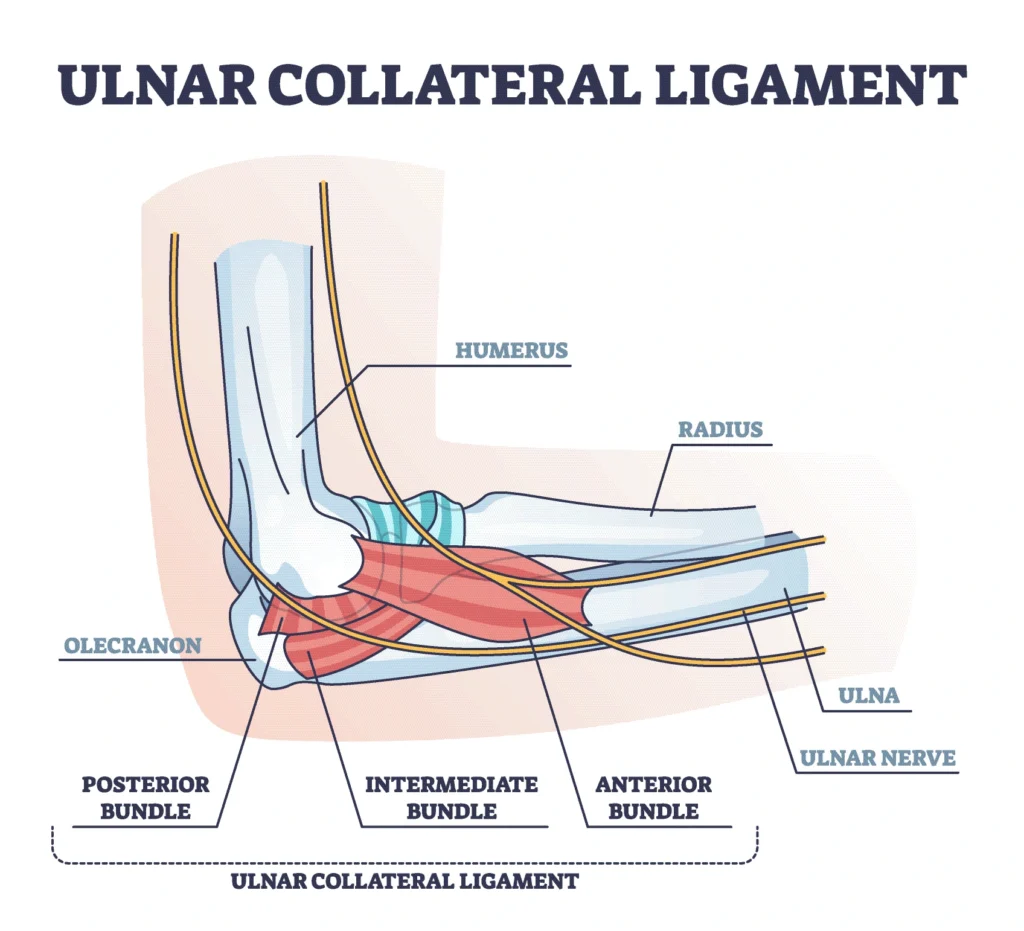
You don’t have to be a professional pitcher to sustain a UCL injury. Quarterbacks, javelin throwers, tennis players, and recreational softball pitchers can all experience this injury depending on the demands of their sport.
Valgus Extension Overload
During the follow-through phase of a throw, the elbow straightens rapidly. As this happens, the bony prominence at the back of the elbow, called the olecranon, can repeatedly bang into the back of the joint. Over time, this impact may cause bone spurs to develop, cartilage to wear down, or small fragments to break off and float within the joint. This is known as valgus extension overload syndrome.
Athletes with this condition commonly feel pain specifically at the back or back-inner side of the elbow. The discomfort tends to be most noticeable during the deceleration and follow-through phases of throwing. If loose bone fragments develop, they can cause locking, catching, or clicking sensations that make throwing feel unpredictable.
Flexor-Pronator Tendinopathy
The flexor-pronator muscle group attaches near the inner elbow and helps control wrist and forearm movements during the throw. Repetitive stress on these tendons can lead to irritation or degeneration in the tissue, a condition called flexor-pronator tendinopathy. It’s a fairly common source of medial elbow pain, and it can present similarly to a UCL injury, which is one reason why a careful clinical evaluation matters so much.
The pain tends to sit right at the inner elbow and may radiate slightly into the forearm. Gripping, wrist flexion, and forearm rotation often aggravate it. Many patients say it feels worse as they ramp up throwing intensity after time off.
Ulnar Nerve Irritation
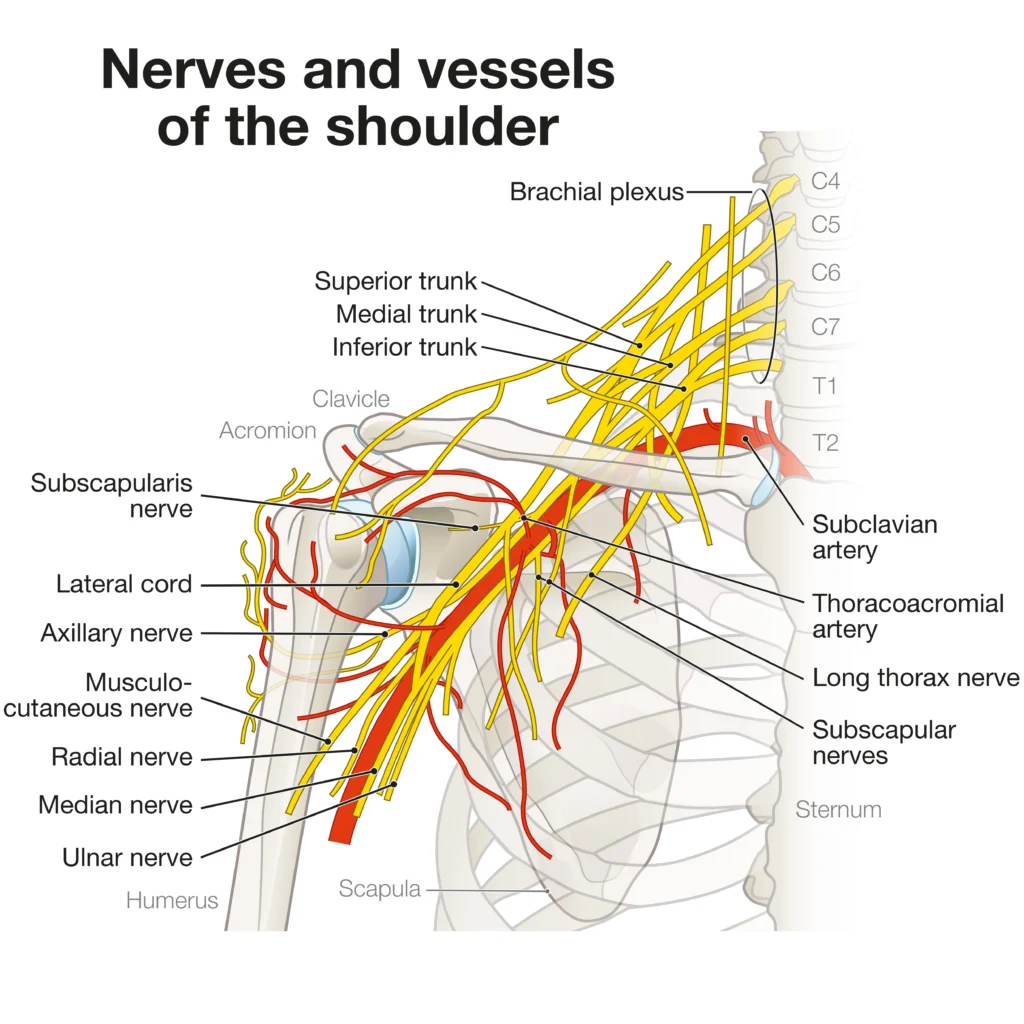
The ulnar nerve travels through a narrow passageway on the inner side of the elbow called the cubital tunnel. The repetitive valgus stress of throwing can stretch or irritate this nerve, producing symptoms like tingling, numbness, or an electric-shock sensation into the ring and little fingers. Some athletes also experience inner elbow pain alongside these neurological symptoms. In some cases, the ulnar nerve can become unstable, actually shifting out of its groove during elbow motion.
Medial Apophysitis (Little Leaguer’s Elbow)
In younger athletes, the growth plate on the inner side of the elbow is a uniquely vulnerable structure. Repetitive throwing stress can inflame or injure this growth plate, a condition most people know as Little Leaguer’s Elbow. Left untreated, this can potentially progress to more serious injury, including avulsion fractures where the bone pulls away from the growth plate.
Young athletes with this condition typically report inner elbow pain that worsens with throwing, sometimes with visible swelling or tenderness. Rest and close monitoring are the mainstays of treatment, and following pitch count guidelines is important for prevention.
Loose Bodies and Osteochondral Lesions
The compression forces on the outer side of the elbow during throwing can sometimes damage the cartilage and underlying bone on the capitellum, the rounded end of the upper arm bone that forms part of the joint. Over time, fragments of cartilage or bone may break off and become loose within the joint.
Osteochondritis dissecans is a related condition that tends to appear in adolescent throwers. It involves a focal area of cartilage and bone damage that, depending on its severity, may eventually require surgical treatment to address.
How Elbow Pain When Throwing Gets Diagnosed
When a patient comes to me with elbow pain when throwing, I start by asking detailed questions: When did the pain begin? Where exactly do they feel it? What phase of the throw seems to trigger it most? Was there a specific moment of injury, or did it come on gradually?
A thorough physical examination follows. I assess range of motion, identify areas of tenderness, and use specialized tests to evaluate UCL stability and other structures. The location of tenderness can be informative.
Imaging typically plays an important role. X-rays can reveal bone spurs, loose bodies, or growth plate changes. MRI is particularly useful for evaluating soft tissue structures like the UCL, flexor-pronator tendons, and cartilage. In some cases, an MRI arthrogram, where a small amount of contrast dye is injected into the joint beforehand, may provide more detailed information about ligament integrity. Ultrasound can also be valuable in select situations.
Treatment Options for Elbow Pain When Throwing
Conservative Treatment
Many throwing-related elbow conditions are initially managed without surgery. The cornerstone of conservative care is relative rest, or a temporary reduction or pause in throwing activity to allow injured tissues a chance to recover. This doesn’t necessarily mean stopping all physical activity. It typically means avoiding the specific movements that aggravate the elbow, while maintaining fitness in other ways.
Physical therapy is a common component of non-surgical treatment. A skilled therapist can address strength deficits, flexibility limitations, and throwing mechanics that may have contributed to the injury. Kinetic chain rehabilitation, strengthening the hips, core, and shoulder girdle, is often a key piece of this work, since a powerful throw starts from the ground up, not just the arm.
Anti-inflammatory medications and ice may help manage pain and swelling in the initial stages. In some cases, a short period of bracing may be appropriate. PRP (platelet-rich plasma) injections represent a regenerative medicine option that may be considered for certain conditions.
For UCL sprains without a complete tear, a structured non-operative rehabilitation program may allow some athletes, particularly younger ones, to return to throwing without surgery. Outcomes can vary, and some patients will need surgical intervention to regain the stability required for throwing.
Surgical Treatment
When conservative management doesn’t deliver sufficient improvement, or when a structural injury like a complete UCL tear is identified upfront, surgery may be the recommended path forward. The specific procedure depends entirely on the underlying diagnosis.
UCL reconstruction, or Tommy John surgery, is the most recognized procedure for a torn UCL. The damaged ligament is replaced with a tendon graft, typically harvested from the patient’s forearm, hamstring, or from a donor source. Recovery after UCL reconstruction requires significant time and commitment. Individual timelines can vary depending on position, sport, and how rehabilitation progresses. In some cases, a UCL repair procedure can also be performed which has a faster recovery and return to sport.
For valgus extension overload with bone spurs or loose bodies, arthroscopic surgery may be used to remove the problematic fragments and clean up the joint. These procedures generally allow for a faster recovery than UCL reconstruction. Osteochondral lesions may also be treated arthroscopically. Surgical treatment for ulnar nerve problems, such as cubital tunnel release or nerve transposition, may be considered when symptoms are persistent and don’t respond to conservative care.
Returning to Throwing After Treatment
One of the first questions I hear from patients after any elbow treatment is, “When can I throw again?” That depends on the diagnosis, the severity of the injury, and how the recovery process unfolds.
Following a significant elbow injury or surgery, a structured interval throwing program is typically used to guide the gradual return to full activity. These programs start with easy tossing at short distances and progressively build intensity, distance, and velocity over weeks or months. Returning too quickly is a common reason athletes experience re-injury, so patience and adherence to the rehabilitation timeline genuinely matter.
Addressing any mechanical factors that contributed to the problem is equally important. A high-stress arm path, excessive pitch counts, or fatigue-related changes in mechanics can all put the elbow at greater risk. Working with a coach or physical therapist who understands throwing biomechanics can help you return not just to throwing, but to throwing more sustainably.
When Should You See a Doctor?
Not every sore elbow needs urgent evaluation. However, there are situations where getting checked out sooner rather than later is clearly worthwhile. I recommend seeing an experienced elbow specialist if:
- Your elbow pain has persisted despite rest and activity modification
- You felt or heard a “pop” at the time of injury
- You’re experiencing numbness or tingling in your fingers
- You’ve noticed a loss of throwing velocity or accuracy that seems tied to your elbow
- Your elbow is visibly swollen or bruised
- Your pain is severe enough to disrupt sleep or daily activities
In young athletes especially, elbow pain should not be brushed off as normal soreness. Getting an early evaluation may help prevent what starts as a manageable issue from developing into something requiring more complex treatment.
Summary
Elbow pain when throwing is a condition that can affect athletes at any level, in any throwing sport, and at any age. The elbow endures significant mechanical stress with every throw, and over time, structures like the UCL, flexor-pronator tendons, ulnar nerve, and joint surfaces can become strained or injured. Accurate diagnosis is the essential first step. Many patients do well with a well-designed conservative program, while others may benefit from surgery. Either way, working with a specialist who understands throwing sports may help support recovery and long-term elbow health.
Frequently Asked Questions
What is the most common cause of elbow pain when throwing?
UCL injuries and flexor-pronator tendinopathy tend to be among the most frequently encountered causes of medial elbow pain in throwing athletes. Valgus extension overload and ulnar nerve irritation are also relatively common. The specific cause can vary depending on the athlete’s age, sport, and throwing volume.
Is it safe to keep throwing through elbow pain?
In many cases, continuing to throw through significant elbow pain is not advisable. Doing so may allow a manageable injury to progress into a more serious one. That said, mild discomfort that resolves quickly with rest doesn’t always mean you need to stop all activity. If you’re uncertain whether what you’re feeling is routine soreness or something more concerning, an evaluation can help clarify that.
At what point should a young athlete see an elbow specialist?
Any youth athlete who develops persistent elbow pain with throwing should be evaluated. Younger athletes have open growth plates that are more susceptible to injury than mature bone. Continued throwing through growth plate pain may lead to more significant damage. Most sports medicine guidelines for youth baseball also recommend close attention to pitch counts and mandatory rest periods to protect developing elbows from overuse.