
If you have a torn bicep tendon and are wondering whether you can continue working out, you are not alone. Many people want to stay active without making their injury worse.
In this post, we will look at which types of exercise may support your recovery, which ones to avoid, and how to safely include movement in your routine. The goal is to help you stay on track with your fitness in a way that supports healing and reduces the risk of further injury.
Key Takeaways
- A torn bicep tendon can occur at the shoulder or elbow, often from lifting heavy weights or repetitive strain. While some cases respond well to conservative care, more serious injuries may require surgery, especially if the tendon is completely torn.
- Common signs of a torn tendon include a popping sensation, sudden pain, visible bruising or swelling, and a change in the shape of the muscle. Prompt medical evaluation is important to determine the best course of treatment.
- Recovery may involve rest, physical therapy, or surgery, depending on the severity of the tear. Strengthening exercises and modified workouts are often part of the rehabilitation plan to support healing and reduce the risk of reinjury.
Understanding Bicep Tendon Tears
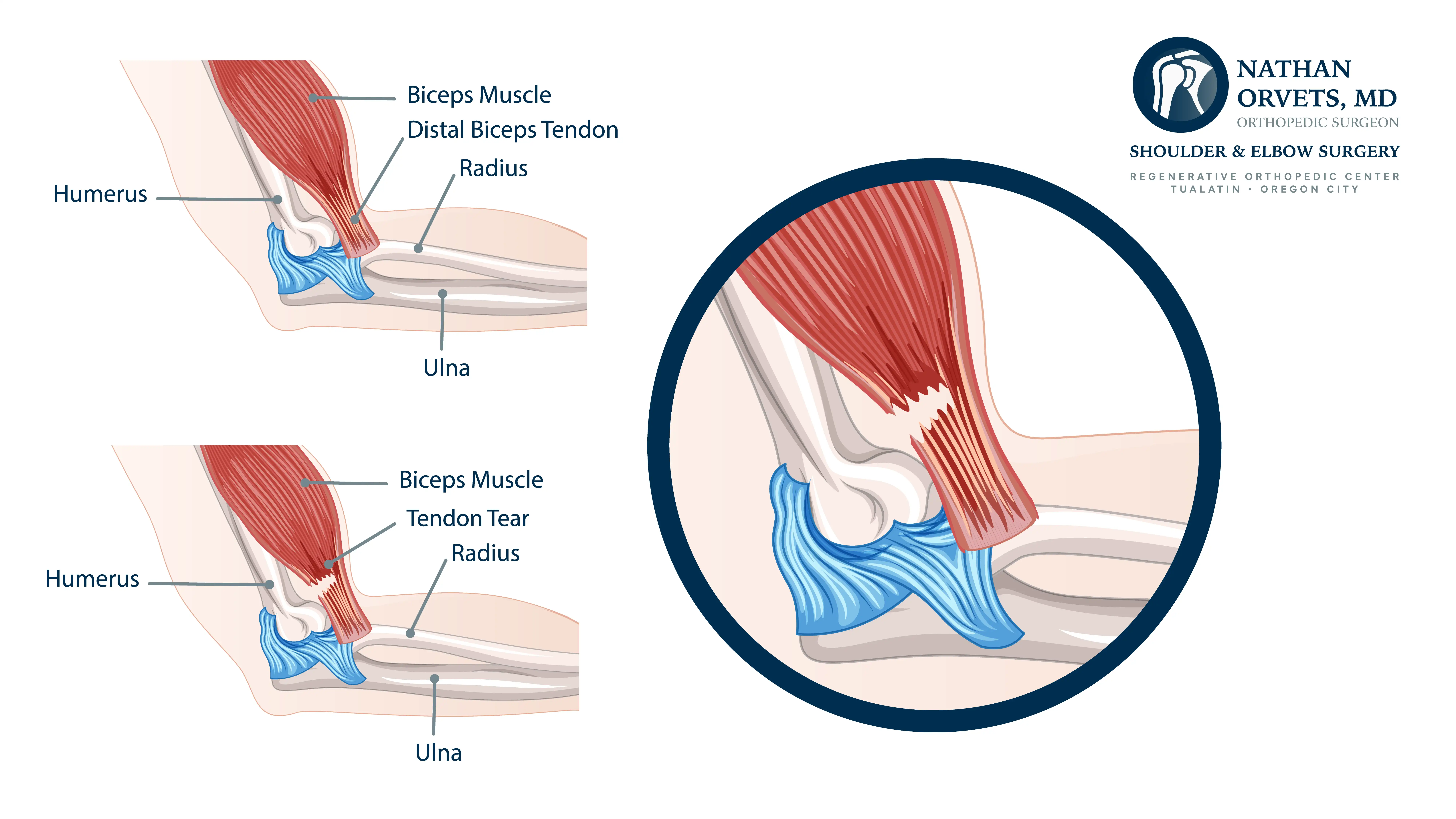
Think of the bicep muscle like a strong rope, with tendons acting as the connection points that anchor it to the bones at the shoulder and elbow. A bicep tendon tear occurs when one of these connection points becomes damaged, either partially or completely pulling away from the bone.
These injuries can happen at the shoulder, known as proximal tears, or at the elbow, referred to as distal bicep tendon tears. Partial tears can worsen over time if left untreated and may eventually lead to full ruptures. When that happens, there is often a noticeable drop in strength, and surgery may be necessary to restore function.
Bicep tendon tears commonly result from activities that involve heavy lifting or repetitive strain, especially when using improper form. Exercises that lack control or coordination can place extra stress on the tendons, increasing the risk of injury.
At the shoulder, the bicep connects to the bone through two tendons. One, called the long head, attaches to the glenoid, while the other, the short head, connects to the coracoid process. Damage to either of these can cause a variety of symptoms, which we will explore in the next section.
Signs and Symptoms of a Torn Bicep Tendon
A torn bicep tendon often presents with sudden and noticeable symptoms. Some of the most immediate signs can include:
- A sharp popping sound at the moment of injury
- Bruising and swelling in the upper arm or near the elbow
- A visible bulge in one part of the upper arm and a noticeable gap in another, indicating the tendon has pulled away from the bone
The severity of symptoms can vary depending on whether the tear is partial or complete. Additional indicators may include:
- Sudden, intense pain at the time of injury, which may lessen after the first few days
- Ongoing discomfort when bending the arm or flexing the bicep
- A change in muscle shape or contour, particularly with full tendon rupture
- Reduced function in the tendon of the long head of the biceps, which may lead to muscle fatigue, cramping, or weakness with repeated use
If you notice any of these symptoms, it is important to consult an orthopedic surgeon. Early diagnosis can help guide the most effective treatment and improve long-term recovery.
When to See an Orthopedic Surgeon
If you experience symptoms like bruising along the upper arm, muscle cramps during arm movement, sharp pain, or difficulty rotating the arm, it is important to seek medical evaluation. These could be early warning signs of a bicep tendon injury.
Other signs that require prompt attention include an unusual bulge in the upper arm, often referred to as a “Popeye muscle,” or hearing a distinct popping or snapping sound at the time of injury. These may indicate a torn tendon that should be examined as soon as possible.
Any noticeable weakness in the shoulder, elbow, or forearm following an injury also suggests that a tendon tear could be present. In such cases, the best course of action is to consult an orthopedic specialist. To confirm the diagnosis and assess the extent of the injury, your doctor may recommend imaging tests such as an X-ray, ultrasound, or MRI.
Can You Exercise with a Torn Bicep Tendon?
If you have a torn bicep tendon, you may be wondering whether it’s still safe to stay active. The good news is that with the right approach, certain exercises can support healing and help manage discomfort. However, it is important to know which movements are safe and which should be avoided to prevent worsening the injury.
Safe Exercises During Recovery
For many people recovering from a bicep tendon tear, gentle, guided movement can play a role in improving flexibility and preserving strength. The following exercises are often used in physical therapy and may be appropriate depending on your stage of recovery:
Biceps Stretch
This simple stretch can be done three times a day, holding each stretch for 15 to 30 seconds to promote flexibility and reduce stiffness.
Elbow Flexion and Extension
These movements help maintain range of motion and are typically performed in two sets of 15 repetitions, twice per day.
Shoulder Flexion
Raising your arm forward and overhead can help improve mobility in the shoulder joint. Aim for 8 to 12 repetitions, two times daily, as tolerated.
Side-Lying External Rotation
This movement targets the rotator cuff and can support shoulder stability without placing strain on the injured bicep.
Isometric Bicep Contractions
These involve activating the bicep muscle without moving the joint. When done correctly, they can maintain muscle engagement without overloading the tendon.
Always consult your healthcare provider or physical therapist before beginning any exercise program during recovery. They can tailor a plan that fits your specific needs and stage of healing.
Exercises to Avoid
While staying active is beneficial, certain movements can put too much stress on the bicep tendon and should be avoided during recovery. These include:
- Heavy lifting exercises like deadlifts or power cleans
- Direct arm training such as bicep curls and triceps pushdowns
- Overhead movements including shoulder presses
- Bodyweight exercises that heavily engage the arms, such as pull-ups or chin-ups
These activities place significant strain on the bicep and surrounding structures, increasing the risk of further injury. Steering clear of them allows the tendon time to heal and reduces the likelihood of complications.
Recovery and Rehabilitation
Healing from a bicep tendon tear often involves a combination of rest, physical therapy, and, in some cases, surgery. The right approach depends on the severity of the injury, the patient’s activity level, and treatment goals.
Nonsurgical Treatment
For partial tears or less severe cases, nonsurgical methods such as anti-inflammatory medications and targeted physical therapy can be effective. These approaches focus on managing pain, reducing inflammation, and gradually restoring strength and mobility. This path is often suitable for individuals who are not heavily involved in physical labor or high-impact sports.
Surgical Treatment
When symptoms persist or the tear is complete, surgical intervention may be recommended. Procedures like biceps tenodesis or arthroscopic repair are commonly used to reattach or reposition the tendon. Surgery is often considered for athletes, active individuals, or those whose work requires regular lifting or overhead movement.
Role of Physical Therapy
Whether treatment is surgical or nonsurgical, physical therapy plays a key role in recovery. Therapy programs are designed to help patients rebuild strength, regain range of motion, and safely return to everyday activities. Initial therapy typically begins with gentle stretching and progresses to strengthening exercises as healing advances.
Most patients begin to regain full range of motion within four to six weeks following surgery. A complete recovery, including full strength and function, may take several months. In many cases, it can take up to six months to fully return to previous activity levels.
Preventing Future Bicep Tendon Injuries
Protecting your bicep tendons after an injury, or avoiding injury in the first place, is an important part of maintaining long-term fitness and joint health. Strengthening the surrounding muscles and practicing safe movement habits can lower your risk of future tendon problems.
Strengthening the Tendons
Including targeted exercises in your routine can help support the biceps and nearby joints. Movements such as hammer curls, standing resistance band curls, and rope curls using a cable machine are useful for building tendon strength and improving arm stability.
Using Proper Technique
Good form is essential for injury prevention. Always warm up before exercising, lift with control, and avoid abrupt or poorly aligned movements. Taking regular breaks during repetitive tasks helps reduce tendon strain.
Avoiding High-Risk Movements
Activities that involve repetitive overhead lifting or lowering heavy objects improperly can place extra stress on the bicep tendons. Minimizing these movements, especially when tired or returning from injury, is important for prevention.
Recommendations for Older Adults
Tendons become less flexible with age, so older individuals should be especially cautious. Avoiding very heavy lifting, paying close attention to how the shoulder and elbow feel during activity, and choosing manageable resistance can help reduce the risk of future tendon injuries.
With smart exercise choices and careful technique, you can continue staying active while protecting your biceps from reinjury.
Adapting Your Workouts
After recovering from a bicep tendon tear, it is important to adjust your workout routine to support long-term healing and reduce the risk of reinjury. The focus should shift toward restoring full range of motion and strengthening surrounding muscle groups that support the shoulder and elbow.
Incorporate exercises that target stabilizing muscles around the scapula and shoulder joint. Strengthening these areas helps offload the biceps and improves overall joint mechanics. Movements that improve posture, shoulder alignment, and controlled arm motion are especially valuable during this phase.
Your previous activity level and overall motivation will play a role in how quickly and smoothly you return to exercise. A gradual, structured approach that includes input from a physical therapist or fitness professional can help you regain strength safely while minimizing stress on the healing tissue.
Summary
Returning to the gym after a bicep tendon tear starts with understanding the injury and recognizing its symptoms. If you suspect a tear, it is important to consult your orthopedic specialist for an accurate diagnosis and guidance on next steps.
Staying active during recovery is possible with the right approach. Safe, targeted exercises, a consistent rehabilitation plan, and a focus on injury prevention all contribute to a strong and lasting recovery. While a torn bicep tendon can be a challenging setback, with proper care and commitment, you can regain strength and return to the activities you enjoy.
Frequently Asked Questions
Is it still possible to lift your arm if your bicep tendon is torn?
In many cases, yes. If the tear occurs near the shoulder, you may still be able to lift your arm, although you might feel pain or weakness, especially when rotating your palm upward. While basic arm movement is often preserved, it is important to speak with a healthcare provider to determine the best treatment based on your specific injury.
What typically leads to a bicep tendon tear?
These injuries are commonly caused by lifting something too heavy, overusing the biceps through repetitive motions, or using poor form during workouts. Any activity that places excessive strain on the tendon can increase the likelihood of a tear.
What are the warning signs of a torn bicep tendon?
A torn tendon often begins with a sharp popping sound, followed by swelling, bruising, or visible changes in the shape of the muscle. You might also feel pain when bending your arm or using the biceps. If you notice these signs, it is a good idea to seek medical attention for a full evaluation.
How do doctors confirm a bicep tendon tear?
To diagnose a tendon tear, healthcare providers usually perform a physical exam and use imaging tools such as X-rays, ultrasounds, or MRI scans. These tests help assess the severity of the injury and guide the treatment approach.