
Shoulder impingement is one of the most common conditions I see in my practice. For the right patient, shoulder impingement surgery can make a meaningful difference in pain, function, and quality of life. In this post, I’ll walk you through what shoulder impingement is, how we typically try to treat it without surgery first, when surgery tends to enter the conversation, what the procedure involves, and what recovery generally looks like.
Key Takeaways
- Shoulder impingement happens when soft tissue in the subacromial space gets pinched during arm movement, leading to pain, inflammation, and sometimes weakness.
- Many cases of shoulder impingement are managed without surgery, through treatments including physical therapy and activity modification.
- Surgery tends to be considered when conservative treatment has been tried for an appropriate period of time without meaningful improvement.
- The most commonly performed procedure is arthroscopic subacromial decompression, which creates more space beneath the acromion to reduce pinching on the rotator cuff tendons.
What Is Shoulder Impingement?
To understand shoulder impingement surgery, it helps to first understand the anatomy involved, and what goes wrong when impingement develops.
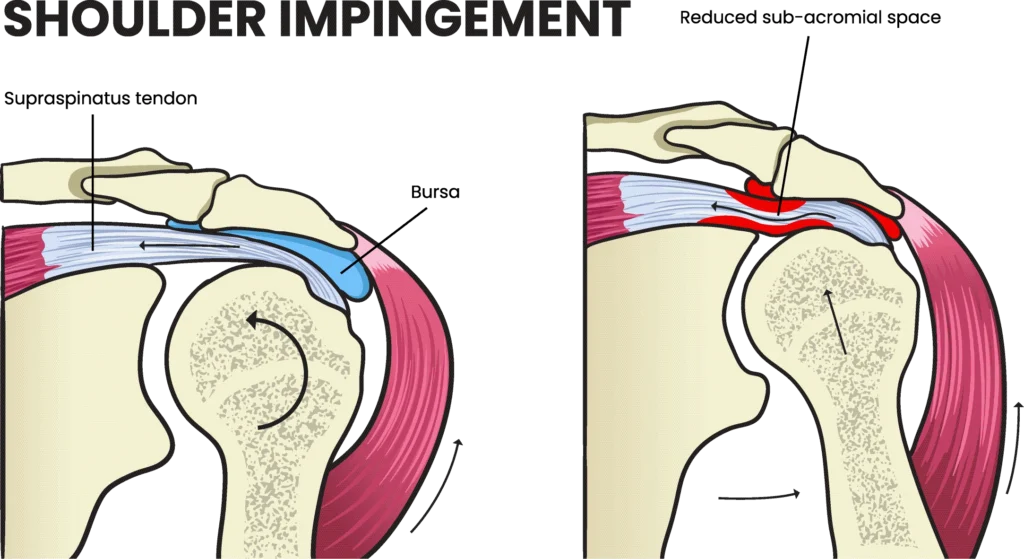
Your shoulder is one of the most mobile joints in the body. It’s made up of several bones: the upper arm bone (humerus), the shoulder blade (scapula), and the collarbone (clavicle). On top of the shoulder blade sits a bony projection called the acromion. Just beneath it lies a narrow corridor called the subacromial space. Several important structures pass through this space, including the rotator cuff tendons and a fluid-filled sac called the bursa, which acts as a cushion to reduce friction between the tendons and the bone above.
When your shoulder is working well, the rotator cuff tendons glide smoothly through the subacromial space as you reach, lift, and rotate your arm. Shoulder impingement is commonly used to describe a group of conditions involving irritation of the rotator cuff tendons and bursa within the subacromial space during arm movement. That repeated irritation leads to inflammation, swelling, and pain. Over time, the tendons can start to break down. In some cases, shoulder impingement may be associated with rotator cuff tendon degeneration or tearing over time, although not all patients will experience this progression.
What Causes Shoulder Impingement?
There are several causes of shoulder impingement. Many factors may contribute, and understanding them helps explain why treatment approaches vary from person to person.
The shape of the acromion itself can play a role. Some people are born with a more curved or hooked acromion, leaving less room for the tendons to pass through underneath. Over time, bone spurs can also develop on the underside of the acromion, further narrowing the subacromial space and increasing the risk of pinching.
Repetitive overhead activity is another significant contributor. Athletes, particularly swimmers, tennis players, and baseball pitchers, as well as workers in trades like painting, carpentry, or construction frequently place sustained demands on the shoulder in positions that load the subacromial space. These populations tend to have higher rates of impingement-related symptoms.
Muscle imbalances matter too. Weakness in the rotator cuff muscles or the muscles surrounding the shoulder blade can cause the humeral head to sit higher in the shoulder joint than it should, reducing the available space above. Poor posture, particularly rounded shoulders, may have a similar effect. Prior shoulder injuries, including partial rotator cuff tears and AC joint problems, can also be contributing factors.
Additionally, with age, the tendons naturally lose some of their resilience over time, making them more vulnerable to the effects of repeated friction and load. This is why impingement tends to become more common as we grow older.
When Conservative Treatment Isn’t Enough
Many patients with shoulder impingement don’t need surgery. For many people, a structured non-surgical program produces meaningful improvement over weeks to months, and surgery never enters the picture.
Non-surgical treatment typically centers on physical therapy. A good PT program for shoulder impingement focuses on strengthening the rotator cuff and the muscles that control the shoulder blade, as well as improving posture and shoulder mechanics. When those muscles do their job well, they create more space in the subacromial region and reduce the loading on irritated tendons. Anti-inflammatory medications may help manage pain and swelling in the short term. Corticosteroid injections into the subacromial space may also offer temporary relief for some patients, particularly when inflammation is significant. Activity modification, temporarily reducing or adjusting the movements that provoke symptoms, is another important piece of the puzzle during recovery.
The challenge is that not everyone responds to conservative care in the same way. Some patients complete a thorough course of physical therapy, try injections, and modify their activities, and they still struggle with pain that limits daily function. When impingement symptoms remain significant after several months of appropriate non-surgical treatment, that’s typically when surgery becomes a more active part of the conversation.
The presence of other findings on imaging, such as a substantial bone spur or a partial rotator cuff tear, may also factor into the timing and nature of that discussion. Every patient’s situation is a little different, and the decision to pursue shoulder impingement surgery should be made collaboratively, with a clear understanding of what has already been tried and what the realistic goals of surgery are.
What Does Shoulder Impingement Surgery Involve?
The most commonly performed procedure for this condition is called arthroscopic subacromial decompression.
Arthroscopic Subacromial Decompression
The term “arthroscopic” refers to how the surgery is performed. Rather than making a large open incision, the surgeon uses a few small portals to insert a tiny camera and specialized instruments into the shoulder. The camera transmits a live, high-definition image to a monitor in the operating room, allowing the surgeon to see inside the joint with excellent detail.
The goal of subacromial decompression is to address potential sources of irritation in the subacromial space. To accomplish that, the surgeon may shave down the underside of the acromion, remove bone spurs that have formed over time, and trim away damaged or thickened tissue. The procedure is intended to reduce mechanical irritation in the subacromial space.
Bursectomy
In many cases, the bursa becomes significantly inflamed and thickened as a result of chronic impingement. When that happens, surgically removing or trimming the bursa, a step called a bursectomy, may be included as part of the procedure. This can help reduce pain and create a healthier environment within the subacromial space going forward.
Inspecting and Addressing the Rotator Cuff
During the procedure, I also take the opportunity to directly visualize the rotator cuff tendons. If imaging before surgery identified a partial tear or other damage, that can often be addressed at the same time, depending on its extent and characteristics. When a more significant rotator cuff tear is present, the surgical plan may need to be adjusted to account for repair. That’s something I discuss with patients thoroughly before we ever step into the operating room.
What to Expect on the Day of Surgery
Arthroscopic shoulder impingement surgery is most often performed as an outpatient procedure, meaning you go home the same day. It’s typically done under general anesthesia, often in combination with a regional nerve block that helps reduce pain in the hours following the procedure.
The surgery itself generally takes under an hour, though the exact duration can vary based on the complexity of the case and whether additional steps are needed. After surgery, you’ll spend some time in a recovery area before you’re ready to be discharged.
You’ll go home with your arm in a sling. It’s important to have someone available to drive you home and help you during the first day or two of recovery.
Recovery After Shoulder Impingement Surgery
Recovery is one of the most important topics to understand before deciding whether to pursue shoulder impingement surgery. The sling is typically used for comfort for the first week or two after a straightforward decompression procedure. If the rotator cuff was also repaired during the same surgery, the immobilization period may be longer. Your surgeon will guide you based on what was done.
Physical therapy usually begins within the first few weeks. Early sessions tend to focus on gentle range-of-motion exercises to keep the shoulder moving and prevent stiffness from setting in. As healing progresses, the program shifts toward strengthening the rotator cuff and the muscles that support the shoulder blade. That rebuilding process takes time.
Returning to full activity, especially overhead sports or physically demanding work, often takes several months. Some patients take a bit longer. It varies based on what was addressed during surgery, your overall health, and how consistently you engage with rehabilitation.
Patience matters here. Pushing too hard too soon can set recovery back. Staying in close communication with both your surgeon and your physical therapist throughout the process is generally the best approach. Recovery from shoulder impingement surgery isn’t always a straight line, and that’s normal.
Summary
Shoulder impingement surgery, most often in the form of arthroscopic subacromial decompression, is a procedure that may be considered for patients who haven’t responded adequately to conservative treatment. The procedure enlarges the subacromial space by removing bone spurs and trimming the undersurface of the acromion, reducing the pinching on the rotator cuff tendons that has been driving symptoms. Recovery involves a period of protected activity followed by a structured physical therapy program that plays a central role in restoring strength and function.
Non-surgical treatment remains the appropriate first step for most patients with shoulder impingement, and many people see good results without ever needing an operation. But when conservative care hasn’t delivered the relief you need, shoulder impingement surgery may be worth a more in-depth conversation with an experienced shoulder specialist.
Frequently Asked Questions
How long does shoulder impingement surgery take?
Arthroscopic subacromial decompression generally takes less than an hour to perform. The exact duration can vary depending on the complexity of the case and whether additional steps are needed at the same time.
Will I need physical therapy after shoulder impingement surgery?
Physical therapy is generally a key part of recovery after shoulder impingement surgery. A structured rehabilitation program helps restore range of motion, rebuild rotator cuff strength, and reduce the risk of stiffness or re-injury. Your surgeon will typically recommend a physical therapist and outline a rehabilitation plan based on your specific procedure and goals.
How do I know if I’m a candidate for shoulder impingement surgery?
Surgery is generally considered for patients who have persistent symptoms despite an appropriate course of conservative treatment. Imaging findings, your overall health history, and the nature of your symptoms all factor into that determination. A consultation with a shoulder specialist can help evaluate whether surgical treatment may be appropriate for your specific situation.