
The bicep curl is a common weightlifting exercise. Experiencing elbow pain when curling is a frequent complaint in the gym, often signaling an underlying issue that requires attention. In this post, we’ll explore the common causes of this specific type of pain, along with treatment options.
Key Takeaways
- The most frequent causes of elbow pain when curling are tendinopathies, specifically medial epicondylitis (golfer’s elbow) and lateral epicondylitis (tennis elbow). Biceps tendonitis is another possible cause.
- Improper form, such as using excessive momentum, flaring the elbows, or performing wrist flexion during the curl, can increase strain on the elbow tendons.
- Acute pain often responds well to relative rest, ice, and over-the-counter medications. A structured rehabilitation program can support long-term recovery.
The Anatomy of the Curl: Where Does the Pain Originate?
The elbow is a hinge joint, but it also allows for rotation of the forearm. This dual function makes it susceptible to various stresses during weightlifting. The bicep curl primarily targets the biceps brachii muscle. This muscle has two heads and crosses both the shoulder and the elbow joint. Its main function is to flex the elbow and supinate the forearm (turning the palm up).
However, the curl also heavily involves the forearm muscles. These muscles originate from bony prominences on the humerus (the upper arm bone) near the elbow.
- Medial Epicondyle: This is the bump on the inner side of the elbow. Overuse of these muscles may lead to pain on the inside of the elbow.
- Lateral Epicondyle: This is the bump on the outer side of the elbow. When these muscles are overused, individuals may feel pain on the outside of the elbow.
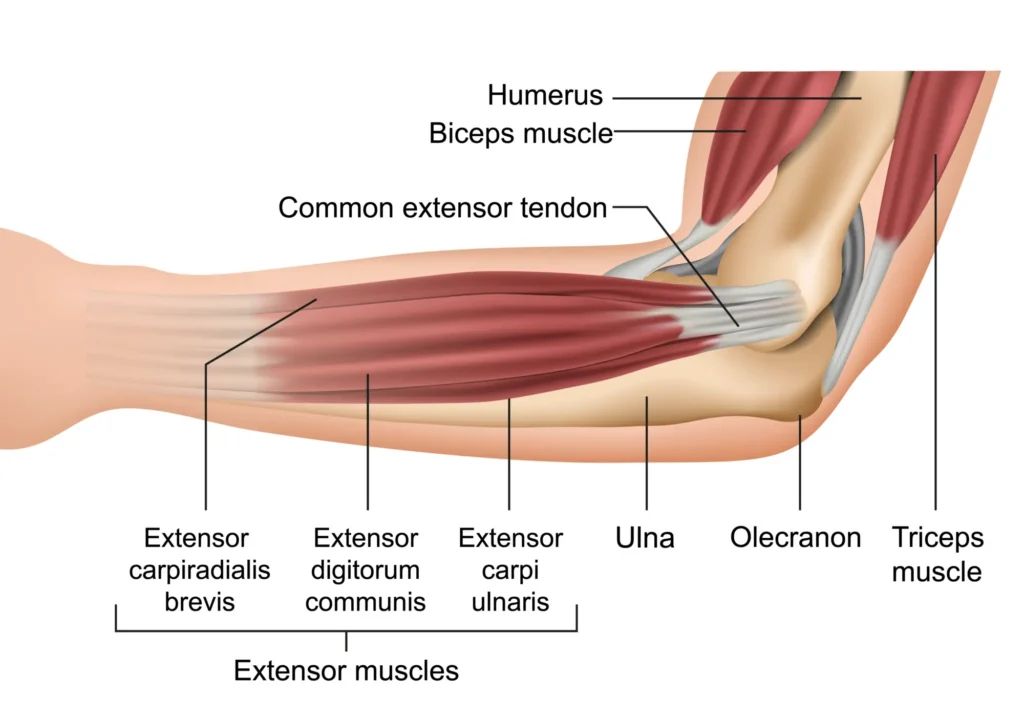
The pain you feel is often not in the joint itself. It typically originates in the tendons, which are the tough, fibrous cords connecting muscle to bone. Tendons can be susceptible to micro-trauma from repetitive or excessive loading.
Primary Causes of Elbow Pain When Curling
When an individual experiences elbow pain when curling, the cause is usually a form of tendinopathy. The specific location of the pain helps narrow down the diagnosis.
Medial Epicondylitis (Golfer’s Elbow)
Golfer’s elbow occurs when the tendons that attach to the medial epicondyle become inflamed. This often leads to tenderness in that area and pain that worsens when gripping objects.
During a bicep curl, the flexor-pronator muscles work hard to stabilize the wrist and forearm, preventing the wrist from dropping backward under the weight. However, certain curling habits can place excess strain on these tendons. Many lifters unintentionally flex their wrists inward as they lift, which increases stress on the common flexor tendon. Keeping a tight grip on the barbell or dumbbell for too long can also fatigue and strain these muscles. Additionally, using a straight bar with a fully supinated (palms-up) grip, especially with heavy weight, may place extra stress on the structures on the inside of the elbow.
Lateral Epicondylitis (Tennis Elbow)
Although less commonly caused by a bicep curl, tennis elbow can still develop during curling exercises. It involves irritation of the tendons that attach to the lateral epicondyle. Symptoms often include tenderness in that area and pain when extending the wrist or gripping objects.
During a curl, the extensor-supinator muscles help stabilize the wrist and forearm. If the weight is too heavy, a lifter may unintentionally compensate by overusing the wrist extensors, which increases strain on the lateral elbow. Additionally, the motion of supinating the forearm (turning the palm up) during a dumbbell curl activates the supinator muscle. If this muscle is weak or fatigued, it may contribute to lateral elbow strain over time.
Biceps Tendonitis
This condition involves irritation or inflammation of the distal biceps tendon. Patients may notice pain in the elbow crease and tenderness when pressing on the front of the elbow in an area commonly referred to as the “elbow pit.”
The biceps tendon plays a central role in lifting the weight during a curl. When the weight or overall volume of curls increases too quickly, the tendon may become overloaded. The lowering phase of the curl places the greatest tension on the tendon, especially if the weight is dropped too quickly or not properly controlled. Over time, this may result in small micro-tears.
The Role of Technique and Training Errors
In the context of weightlifting, a common trigger for elbow pain when curling is a combination of poor technique and inappropriate load management.
Improper Form
Minor deviations in form can translate into stress on the elbow joint.
- Using Momentum: Swinging the weight up involves using the back and shoulders. This jerking motion can place a sudden, uncontrolled, and high-impact load on the elbow tendons. The movement should be slow and controlled, especially during the lowering phase.
- Elbow Flaring: Allowing the elbows to move away from the sides of the body during the curl changes the line of pull.
- Wrist Position: The wrist should remain neutral, straight, and aligned with the forearm throughout the entire range of motion.
- Incomplete Range of Motion: Consistently stopping short of full extension at the bottom of the movement may lead to reduced flexibility or weakness. When the joint is occasionally forced into full extension, the sudden stretch can cause injury.
Load and Volume Errors
The body can generally adapt to stress, but only if the stress is applied gradually.
- Too Much Weight: Lifting a weight that forces a breakdown in form or prevents controlled movement can cause injury.
- Rapid Volume Increase: Suddenly adding more sets, more repetitions, or more training days without a corresponding increase in recovery time can overwhelm the tendons’ capacity for repair.
- Insufficient Warm-up: Cold tendons and muscles are less pliable and more susceptible to injury. A proper warm-up may include light cardio, dynamic stretching, and specific warm-up sets with very light weight.
Treatment Strategies for Elbow Pain When Curling
Treatments may differ between patients, based on the severity and type of condition causing elbow pain when curling. Most treatment paths will begin with non-operative methods.
Phase 1: Acute Management and Relative Rest
When pain first appears, the goal is typically to calm the irritated tissues.
- Relative Rest: Complete rest is rarely necessary and may actually be detrimental to tendon health. Instead, consider adopting relative rest. This means temporarily stopping all activities that reproduce the pain. You may continue training other body parts, such as legs or core, that do not stress the elbow.
- Ice Application: Applying ice to the painful area for 15 to 20 minutes several times a day can help reduce local pain and swelling.
- Over-the-Counter Medication: Nonsteroidal anti-inflammatory drugs (NSAIDs) like ibuprofen or naproxen may help manage pain.
- Bracing: A counterforce brace, worn just below the elbow, may help in some cases.
Phase 2: Targeted Rehabilitation and Strengthening
Once the acute pain subsides, the focus generally shifts to restoring the tendon’s strength and resilience. Eccentric exercises involve lengthening the muscle and tendon under tension. This type of loading may help make the tendon fibers stronger and more tolerant to stress. Isometric exercises involve contracting the muscle without changing its length. These are often helpful for pain relief and may be introduced early in the rehabilitation process. Additionally, maintaining flexibility in the forearm muscles can be helpful in many cases. A physical therapist can recommend the best exercise plan for you.
Phase 3: Gradual Return to Activity
The final phase frequently involves slowly reintroducing the bicep curl and other gripping activities. Most individuals should start light, focusing entirely on perfect form and maintaining a slow, controlled tempo. Sharp, increasing, or lingering pain is a sign to stop and reduce the load.
Advanced and Medical Interventions
While most cases resolve with conservative management, some persistent or severe cases of elbow pain when curlingmay require advanced medical intervention. In some cases, platelet-rich plasma (PRP) therapy, a regenerative treatment where the patient’s own platelets are injected into the injured tendon, may help stimulate healing.
Surgery is typically reserved for patients when non-operative treatments fail to provide adequate relief over a period of time. The surgical procedure usually involves debriding (removing) the damaged, degenerative tendon tissue and repairing the healthy tendon back to the bone. For chronic bicep tendonitis, a surgical tenodesis may be used to reattach the tendon.
Summary
Experiencing elbow pain when curling is a common setback, but many treatment options are available. Most patients find relief through conservative measures. These may include correcting fundamental technique flaws, managing training load, and committing to a structured strengthening program. Persistent or severe pain may warrant the expertise of a specialist. An experienced elbow specialist can help guide the most appropriate treatment path for you.
Frequently Asked Questions
Is it possible that my shoulder is causing my elbow pain?
It is possible. If your shoulder lacks mobility or stability, your elbow may compensate. For example, if you have poor shoulder extension, you might flare your elbows out during the curl to achieve a full range of motion. This poor positioning may overload the elbow tendons.
Does my grip width on the bar matter for elbow pain?
Yes, grip width can influence the stress on your elbow. A very narrow grip on a straight bar tends to emphasize the outer (long) head of the biceps. This can sometimes increase the rotational stress on the elbow joint. A slightly wider, shoulder-width grip is often a more balanced and comfortable position for the elbow.
Can I keep working out while I recover from elbow pain when curling?
In many cases, yes, as long as you avoid movements that trigger pain. Instead of stopping all training, consider modifying your routine. You may focus on lower-body workouts, core training, or upper-body exercises that don’t stress the elbow. Some patients also switch to variations like resistance bands once symptoms improve. If pain continues despite modifications, that’s your cue to pause and speak with a specialist before returning to bicep-heavy exercises.